
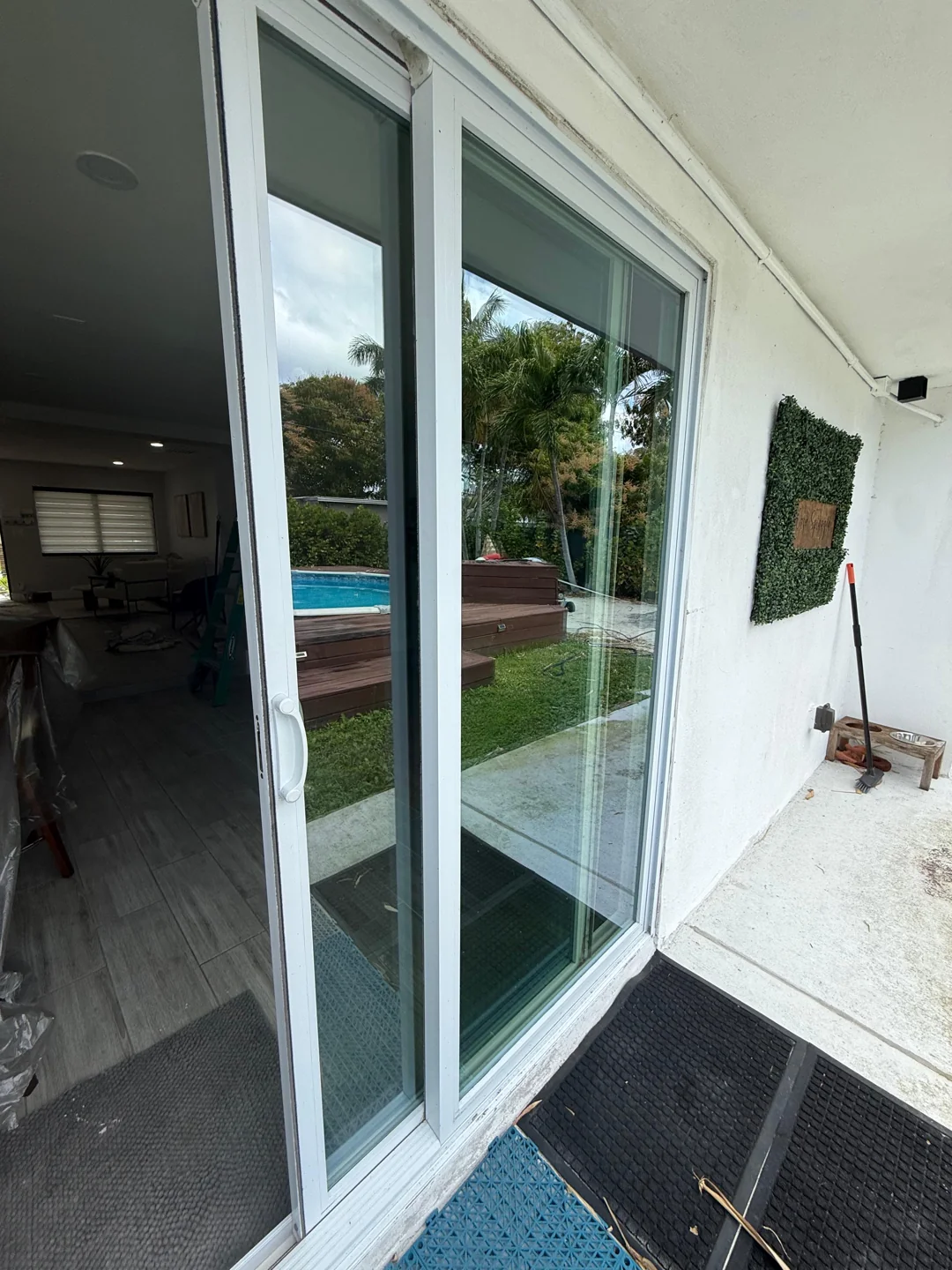
Sliding door glass fails from impact, stress and failed seals
Sliding door panels use one of three kinds of glass, and each fails differently:
- Tempered glass is heat treated so that it breaks into small, blunt pieces instead of long shards. It is strong across the face but vulnerable at the edges. A chip on the edge from a panel rubbing the frame, or a hard knock, can make the whole pane burst at once, sometimes long after the damage happened.
- Laminated glass is two or more layers of glass bonded to a plastic interlayer. When it breaks, the pieces stay stuck to the interlayer and the pane stays in the frame. This is the glass used in most impact resistant doors. Over many years the edges can cloud or separate where moisture reaches the interlayer.
- Insulated glass is two panes held apart by a spacer and sealed at the edges. When the seal fails, humid air gets between the panes and leaves fog or a white film that cleaning cannot reach.
Other common reasons for replacement are deep scratches, etching from sprinkler or pool water, a crack that runs from a corner, and a panel damaged in a storm or a break in. If glass is already broken and the opening is not secure, start with emergency glass repair.
The glass type and the approval are identified before anything is ordered
A replacement can only be ordered once the existing panel is understood. The check covers:
- The glass makeup. Single pane, insulated or laminated, and the thickness of each layer. Tempered panes usually carry a small etched mark in one corner. A laminated pane shows the interlayer at its edge.
- The panel construction. Some sliding panels can be taken apart and reglazed. Others are built so that the glass and the sash are replaced together.
- The approval. Labels on the frame and the product approval number, if the door has one, show what glass the door was tested with.
- The size. Glass is measured to the glazing pocket, not to the visible opening. Tempered glass cannot be cut after it is tempered, so it is made to size.
Safety glazing is not optional on these doors. The federal glazing standard in 16 CFR 1201 lists patio type sliding glass doors as a covered product, and the Florida Building Code treats glass in sliding door panels as a hazardous location that calls for safety glazing.
How a panel is reglazed or replaced, step by step
- Measure and specify. The pocket size and the full glass makeup are recorded, and the replacement is matched to the door and to its approval where one applies.
- Order the glass or the panel. Lead times depend on the glass and the supplier. Impact and insulated units are made to order.
- Remove the panel. The panel is lowered on its rollers and lifted out of the frame. Broken glass is handled with care and removed from the site.
- Take out the old glass. The glazing beads or stops are removed, and the old glazing tape or sealant is cut and cleaned out of the pocket.
- Set the new glass. The pane sits on setting blocks so its edge never touches metal, and it is sealed with the glazing method the door was built with.
- Reinstall and adjust. The panel goes back on the track, the rollers are adjusted, and the door is checked for an even gap, a working lock and a full, smooth slide.
The visit is also a good time to check the rollers and the track. A panel that has been rubbing the frame is often the reason the glass broke in the first place. See roller repair and track repair.
Replace the glass when the frame is sound, the door when it is not
Replacing the glass or one panel makes sense when the frame is straight, the track and hardware work, and replacement glass that matches the door can be made. It keeps the rest of the door, its frame anchoring and its seal to the wall untouched.
A full new door is usually the better choice when:
- the frame or sill is corroded through, bent or leaking where it meets the wall;
- the door is an older non impact unit and you want impact protection, which glass alone does not provide;
- several panels are failing at once, or parts for the door can no longer be found;
- the replacement glass would not match what the door's approval allows.
For a whole new door, see patio door installation and the guide when to replace instead of repair.
In Miami-Dade and Broward, the replacement has to match an approved product
Miami-Dade and Broward counties are the High Velocity Hurricane Zone (HVHZ) of the Florida Building Code. Doors there need product approval for that zone: a Miami-Dade Notice of Acceptance or a Florida Product Approval valid for the HVHZ. An approval covers the door as it was tested, including its glass. The impact test in TAS 201 fires a 9 pound piece of 2 by 4 lumber at the glazing, and the door only passes with the glass makeup that was in it at the time.
So on an impact door, the replacement glass should be the same makeup the approval lists. Fitting ordinary tempered glass into an impact door would leave a frame that looks the same but no longer matches what was approved. Ask for the approval number and the glass specification before work is authorized.
The climate matters too. Strong sun and high humidity put stress on insulated glass seals, which is why fogged panes are so common here. In condominiums, Florida law requires the board to adopt hurricane protection specifications for each building, and many buildings also have rules for contractors and exterior changes. Check with the association before ordering glass that changes the look of the door.
Questions to ask before you approve glass replacement
- What glass is in the door now, and what exact makeup will replace it?
- Does the replacement match the door's product approval, and what is the approval number?
- Will the glass be replaced in the existing sash, or will the whole panel be replaced?
- Will the rollers and the track be checked when the panel is out?
- What is the full total for glass, labor and removal of the old glass, confirmed in writing?
To see what the visit looks like, read what to expect on replacement day. Coverage by county and city is on the service areas page.